

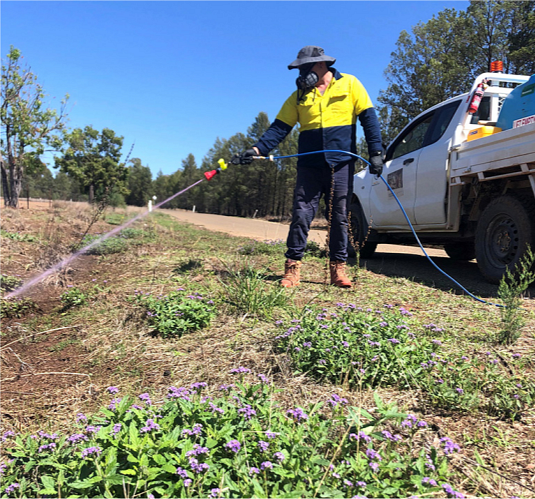
Council’s Biosecurity Team at work
Parkes Shire Council’s Biosecurity Team has completed thousands of kilometres of inspections and helped prevent the spread of invasive weeds over the past 12 months, protecting the region’s environment, agricultural industries and local communities.
During the 2025/26 financial year, the team inspected more than 4,550 kilometres of roads, 46 kilometres of rail corridors and 12 kilometres of waterways to monitor and manage priority weeds across the Shire.
The team also carried out inspections at 15 high-risk sites, including nurseries, pet shops, saleyards and landscape suppliers, as well as 113 private rural and urban properties, 19 Council-managed sites and 17 state-managed sites.
One of the team’s biggest success stories has been its ongoing work to eradicate Parthenium Weed, one of Australia’s most invasive weeds. Since the weed was first detected on a private property in Parkes Shire in 2020, Council has undertaken regular inspections of the infestation site and surrounding roadsides, neighbouring land and nearby state forest.
These efforts have delivered outstanding results, with infestations reduced from more than 500 plants in 2020 to just 20 plants in 2024, and no Parthenium Weed detected during inspections in either 2025 or 2026.
In addition to inspections, the Biosecurity Team is committed to educating the community about invasive weeds and biosecurity risks. During the past year, the team attended four regional shows across the Shire, providing advice to residents and landholders about identifying and managing priority weeds.
Council reminds all landholders that under the Biosecurity Act 2015, everyone has a shared responsibility to prevent, eliminate and minimise biosecurity risks on their land.
Residents seeking advice on priority weeds or their biosecurity responsibilities are encouraged to contact Parkes Shire Council.