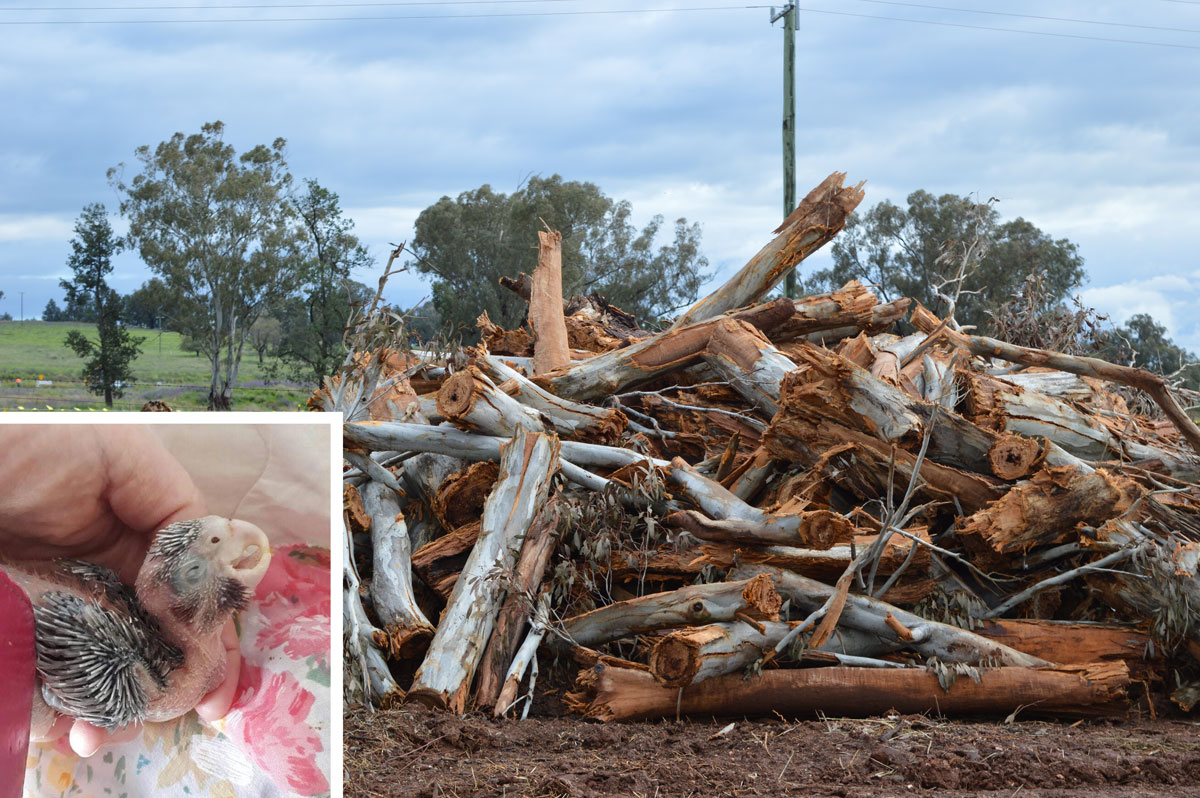
The devastation of hundreds of trees and other vegetation being cut down as part of the development of the Parkes Special Activation Precinct has caused an outcry among members of the community.
“The trees and undergrowth that have been wiped out along Brolgan and Coopers Roads is disgraceful,” said one community member who contacted The Parkes Phoe-nix about the more than 5km of site clearing that started last month.
“So many trees were cut down and a lot of them were big and old. The amount of habitat loss is terrible – so many animals with babies killed, birds displaced, and possums, gliders, microbats and lizards lost their habitat,” said a local wildlife carer.
“It should never have happened during spring, it is just unbelievable,” said the carer who is looking after several baby birds that were rescued.
A spokesperson for the Department of Regional NSW, who is responsible for developing the Special Activation Precinct, said the clearing of vegetation, including trees, was necessary to accommodate the road design.
The construction work includes raising Brolgan Road and a new shared path by an average of one metre to mitigate against floods, which requires a larger footprint than is currently used by the lower-level roads. “All clearing for this purpose is within the existing road reserve,” said the spokesperson.
According to the Department of Regional NSW a dedicated ecologist is working onsite as part of the project team during vegetation removal to ensure any sensitive ecology is preserved, and any fauna is identified and relocated throughout this process.
The team has installed more than 80 nesting boxes in trees adjacent to the project to provide alternative nesting and roosting places for wildlife.
The local wildlife carer, who preferred to remain anonymous, said the nesting boxes should have been put up long before the start of the clearing project. “A lot more care should have gone into checking hollows and nests before trees were cut down.”
While more than ten hatchlings and nestlings were taken to the vet, as well as some micro bats, the carer felt there would’ve been lots more birds that needed to be rescued judged by the number of trees cut down, while many of them did not survive the ordeal.
“It is just so distressing seeing the little blue wrens trying to make a home in the mounds of cut down vegetation as they have nowhere else to go, the many other displaced birds that keep on coming down to the rubble, while birds are fighting in the distance as they cross over into other territories. Butcher birds and Kookaburras can’t cross territories and will be killed.” The carer said the paddocks nearby hardly had any trees left to provide alternative homes.
According to the spokesperson the Department’s team also worked with a local Indigenous group to identify and transplant a group of native bushes to another area of the project that is not being disturbed.
Some measures have been taken by the Special Activation Precinct construction program that will see the planting of more than 3,200 new plants, including more than 800 from medium-large tree families. “An additional 350,000 square metres of spray seed will be applied to any potentially disturbed areas, basins and embankments,” said the spokesperson.
The mounds of vegetation left after clearing will be mulched on site, with the majority to be reused for project landscaping.
While the Special Activation Precinct has been hailed as a project that will ensure a strong, diverse economy for Parkes creating jobs and opportunities for the whole region when completed, the concern from community members is whether it is a case of progress at the expense of everything else.