• Home
  • Articles
    • Front Page
    • General Interest
    • Special Interests
    • Snippets
    • Mayoral Notes
    • Letters to the Editor
  • Our Community
    • Our People
    • Question of the Week
    • Jobs in the Central West
    • Be Seen
    • What’s On
  • Special Interests
    • Women In Business
    • Rural Round Up
    • My Place
    • Health & Wellbeing
    • Loving Local Living
    • Just a Short Drive
    • Real Estate
  • Sports
    • Bowls
    • Cricket
    • Equestrian
    • Footy Tips
    • Golf
    • Netball
    • Rugby League
    • Rugby Union
    • Soccer
    • Touch Football
  • Classifieds
  • Competitions
  • Contact Us
    • Contact Page
    • Advertise with us
    • Testimonials
    • Submit an Article
    • Subscribe to the Parkes Phoenix

Parkes Phoenix

Greedy Steer Sets Record

July 5, 2018 By Maggi Barnard

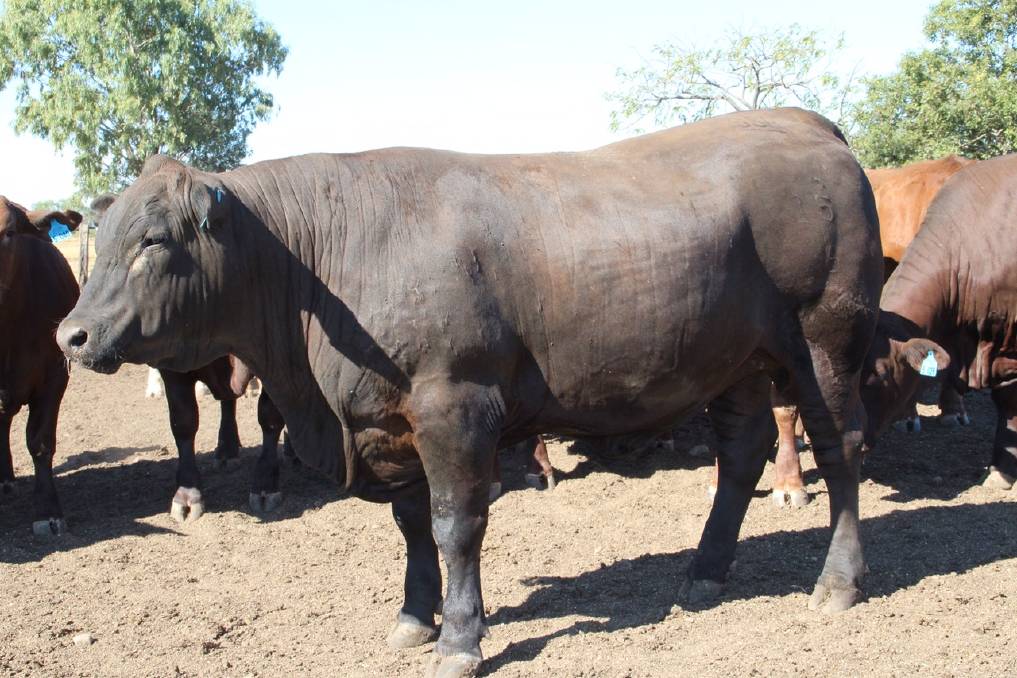
A greedy Senepol/Angus cross steer from Canowindra has set a new record with its daily weight gain during the Callide Dawson Beef Carcase Competition in Queensland. The 24-month-old steer gained a whopping 4.6kg daily weight, the highest mid-term weight gain in the competition’s 30 year history. The steer, one of three entered by first time exhibitors Clayton and Sarah Maynard of Southern Star Rural near Canowindra, currently leads the pack of 143 competition steers at the 53-day mark of their feedlot preparation. Senepols are leading the way for breed results
too with the top four exhibits doing 3.41kg/day, ahead of the overall competition average of 2.87kg/day.

Clayton integrated Senepols alongside a composite breeder herd when he began his operation eight years ago, with this indulgent steer sired by 5 Star 130509. He credited genetic selection as the secret to the steer’s surprising success having been a middle of the range animal when he left for the competition.

“At the time I didn’t think this particular steer was a stand out, he wasn’t an overly big calf and was middle of the range for weight,” he said. “You need to benchmark yourself. We think we are doing a good job, but until you enter a competition like this and get that feedback, I think that’s vital for decision making down the track.”

A selection of quality Senepol and Senepol/Angus and Senepol/ Charolais bulls are available for sale from Southern Star Rural in Canowindra. Call Clayton Maynard on 0439 029 204 for more information.

Ostini Wool Weekly Market Update

May 31, 2018 By Maggi Barnard

The unprecedented rise of the Australian Wool Market has continued in Week 47. 30,053 bales were put before the trade this week and despite the offering again consisting of many lower yielding, lesser style wools, the market continued its bullish trend, as buyers continued their aggressive approach, perhaps due to concern over upcoming supply. Merino wools received strong support with all types and descriptions posting solid gains. 17.0 micron all the way through to 22.0 micron, generally sold at levels 40-80 cents above those achieved at the previous sale.

The NRI was already sitting at an all-time high, after considerable rises over the previous few sales, this week it added a further 38 cents, pushing it to a new record of 2033 cents. The NRI has now added an impressive 453 cents Y.O.Y, an increase of 29%, while it has gained 54% or 712 cents on the past 2 years. Another point worth noting, the Individual Micron Price Guides (MPG) for 17.5 all the way through to 22.0 micron, are all sitting at previously unseen levels.

Source: AWEX

Ostini Wool Weekly Market Update

May 3, 2018 By Maggi Barnard

On the back of supply concerns, the Wool market rose for the third consecutive week despite the selection consisting of a large number of poorer style wools.

On the first day of selling aggressive buying pushed prices higher and as a result the NRI rose by 23 cents, finishing the day at 1,908 cents (one cent off the previous record set in February). On the second day of selling, buyers became more selective in their merino purchases, pushing prices for that sector down, however the NRI still managed a 4-cent rise, due to the steep rise in the crossbred sector.

The skirtings market managed rises of 20-40 cents, low VM lots and those with favourable AM results recorded the largest gains. The crossbred sector also continued its upward trend, posting its fourth consecutive weekly increase, with significant gains pushing some MPG’s into record territory.

The oddment market rose for the fifth consecutive trading week. All types and descriptions generally sold at levels 5-10 cents above those achieved at the previous sale.

Source:AWEX

Chemical Solutions For Pest And Weed Problems

May 3, 2018 By Maggi Barnard

Aussie farmers struggling to keep on top of pests and weeds will have access to a wider range of chemicals thanks to a $1.78 million Coalition Government investment. Minister for Agriculture and Water Resources David Littleproud said the third round of the Agvet Chemicals Grants Program would deliver 26 grants to address a range of priority uses.

“We need to give farmers the tools to stay ahead of the game and do what they do best, farm,” the Minister said. “This round will unlock access to a range of chemicals which include applications for fodder beets in the dairy industry, mushrooms, green tea, quinoa and papaya.”

“These include Targo to manage mites in cocoa crops, Sero-X to manage mirids in lucerne crops, Vivado to manage cobwebs in mushrooms and Amistar to manage leaf blight in sweet corn.”

“The previous two rounds of the program awarded 100 grants to RDC applicants totalling $4.11 million, and have already resulted in improved chemical access.”

“This includes an effective treatment of annual rye grass in chickpeas, lupins and peas, a fungicide to prevent root rot in tomatoes and a growth regulator for use in our mango industry.”

For more information, visit agriculture.gov.au/ag-farm-food/ag-vetchemicals/improved-accessagvetchemicals/agvetassistance-grants.

Ostini Wool Weekly Market Update

April 5, 2018 By Maggi Barnard

Prices across the entire merino spectrum suffered corrections, with reductions of 20- 30 cents common for the week. The main exception was 22.0 micron which managed small increases as well as the superfine end which continued to be erratic on a limited offering. By the end of the sale the Northern Region Indicator had shed 15 cents to close the week at 1,837 cents.

Although all types and descriptions lost ground, it was lots possessing high midbreaks that suffered the greatest reductions, while those with low midbreaks recorded very little change.

The skirting market performed slightly better with prices generally reduced by 10-20 cents (wools containing less than 3.0% vm and those with excellent AM results were least affected). The crossbred & oddment markets bucked the trend with rises of 10- 30 cents common.

No sales will be held next week due to the annual Easter recess. Sales resume in Week 41 with a current forecast of 48,809 bales rostered.

Source:AWEX

Vegetation Program To Ensure Power Safety

April 5, 2018 By Maggi Barnard

Essential Energy will soon begin a comprehensive vegetation management program in Parkes and surrounding areas to ensure the ongoing safety and reliability of the local electricity network.

The vegetation program will be undertaken by Essential Energy’s qualified contractors in compliance with the Australian Standard AS 4373 ‘Pruning of Amenity Trees’ where possible. Occasionally, however, their practices can vary to accommodate the physical location and regrowth pattern of particular vegetation, or to comply with the Electrical Safety Rules and legislation such as the Electricity Supply Act 1995.

Manager community relations Northern, David Crough, said the vegetation program was about striking a balance between preserving the town’s trees and ensuring power safety and reliability for the community.

“A safe and reliable electricity network is a priority for Essential Energy and the management of vegetation in and around powerlines plays a crucial role in safeguarding power supplies,” David said. While Essential Energy is committed to protecting the local environment and the safety of the community, David emphasised that trees and overhead powerlines could be a dangerous combination.

“Trees coming into contact with overhead powerlines pose serious hazards to people, wildlife and the surrounding environment, with potential for bushfires, damage to property, injury and unplanned power outages,” David said.

“Our comprehensive vegetation management program ensures minimum safety clearances are maintained between trees and overhead powerlines and helps to minimise the trimming required in the future, while also securing a more reliable power supply.”

Essential Energy uses directional pruning techniques that remove branches growing towards a powerline and encourage re-growth away from the power network. While this can affect visual amenity, these techniques are considered best practice throughout the arboriculture industry and are used by most power companies in Australia.

Residents can download Essential Energy’s Tree Planting Guide at essentialenergy.com.au/trees for helpful tips on appropriate species for planting near powerlines or contact 13 23 91 for more information.

Ostini Wool Weekly Market Update

March 1, 2018 By Maggi Barnard

General increases of 20 – 50 cents were enjoyed across the entire merino fleece offering, pushing the NRI up 9 cents, to close at 1902 cents. VM levels continue to increase, with FNF wools currently representing just over half of the fleece offering, resulting in increasing premiums, compared to similar wools carrying more fault.

The skirting market went against the trend of the fleece. Losses were felt across all microns, generally between 20 and 30 cents, with wools carrying less than 2.0% least affected.

The oddments market followed a similar path, with higher VM lots the hardest hit as buyers favoured the lower VM types. Prices were generally reduced by 20 – 40 cents, pushing the carding indicators down by an average of 23 cents.

The crossbred sector rose for the third consecutive week, with gains of 5 – 20 cents felt across the board. Main buyer
interest was focussed on better prepared lines, and as a result these wools enjoyed the greatest competition.

Source:AWEX

Ostini Wool Weekly Market Update

February 1, 2018 By Maggi Barnard

Last week saw lots with unfavourable test results struggling to find support. High midbreaks fleece became almost unquotable, while low mid-breaks attracted intense competition and remained generally unchanged. 18.0 to 20.0 micron were the hardest hit, with prices generally 30 to 80 cents cheaper, leaving the NRI to close 56 cents lower at 1845. Worth noting was the stylish selection of fine fleece (<17 micron) which managed increases of 5 to 15 cents.

The magnitude of the correction in the skirting sector was dependent on vegetable matter, with the higher vm lots being the hardest hit. The cross bred sector also suffered large corrections. Any lines that were poorly prepared lacked buyer interest and suffered heavy discounts. Prices generally fell by 40 to 80 cents, the exception being 32 micron and coarser which were only 10 to 20 cents easier.

The oddment market was the worst performer by far, with prices shedding 150 to 250 cents, making it the largest weekly fall in the Carding Indicators (since1997).

Source:AWEX

Tips To Avoid Harvester Fires

November 30, 2017 By Maggi Barnard

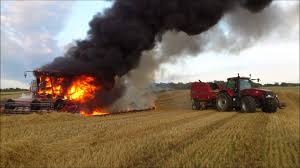
There are a number of elements that add to the risk of fire on harvesting machinery. Most of these can be monitored, maintained and addressed to avoid fires. According to Kondinin Group research, dust and trash build-up on the machine and bearing failures account for around half of harvester fires.

Mechanical failures are implicated for one in 12 harvester fires. While static electricity is regularly blamed for starting fires, static discharge does not have sufficient energy to ignite crop dust.

Reducing harvester fires requires minimisation of the fuel and the ignition source with regular clean downs of the machine, particularly in dusty crops and those that have suffered mould and disease. In extreme cases a blowdown every boxful may be required.

Bearing failure is the cause of one in four harvester fires. Buy an infra-red thermometer (around $50) and monitor bearing temperatures, keeping a log of discrepancies. Some pulse crop plant material can ignite at temperatures as low as 130°C. While this can vary by seasonal conditions, there are plenty of components on a harvester that exceed this. In most cases much of the exhaust stream can exceed this.

Harvester exhaust system components can be insulated with ceramic coatings, moulded amorphous silica and insulating jackets to significantly reduce the area of high temperature.

(Source: GRDC.com.au)

Ostini Wool Weekly Market Update

November 30, 2017 By Maggi Barnard

After the recent price run, this week’s market saw buyers become more selective in their purchases, leaving the NRI to close 20 cents cheaper at 1756.

The market opened solidly, selling at levels at / or above those achieved at the previous sale. However as the sale progressed, prices began to deteriorate, with the finer microns experiencing the largest corrections.

In general terms, the finer micron fell by 30‐40 cents, while the medium to broader microns retraced 15 ‐ 20 cents.
The skirting market also corrected, with prices generally shedding 20‐40 cents, with the finer microns and higher VM lots most affected. The crossbred sector retraced 20‐40 cents, with 28.0 micron and coarser suffering the largest reductions. The oddment market defied the trend and managed to maintain its upward momentum, with most types and descriptions closing 10‐20 cents dearer, while the large offering of lambs was irregular but generally 15‐30 cents dearer.

Source AWEX

  • « Previous Page
  • 1
  • …
  • 14
  • 15
  • 16
  • 17
  • 18
  • …
  • 24
  • Next Page »

Click here to download the recent issue (186) of The Forbes & Parkes Phoenix (2.1MB PDF) – 24th April 2026

SEARCH THE PHOENIX

STAY CONNECTED

The Parkes Phoenix would like to thank you, our Facebook friends, for your continued support and readership!

Phoenix Office
7/113-127 Rankin Street, Forbes NSW 2871

Editor
0432 337 278
editor@parkesphoenix.com.au

Sales
0432 337 278
sales@parkesphoenix.com.au

View our Privacy Policy.
View our Conflict Resolution Process.
View our Ethics and Complaints Policy.
Want to advertise with us?
Information on our Community Promotions.

We are always looking for new articles of interest to the local community.

Please feel free to submit an article for possible inclusion in a future issue.

To submit an article, click here to use our online article submission form.

Subscribe

* indicates required

Copyright © 2026 · Magazine Pro Theme On Genesis Framework · WordPress · Log in