• Home
  • Articles
    • Front Page
    • General Interest
    • Special Interests
    • Snippets
    • Mayoral Notes
    • Letters to the Editor
  • Our Community
    • Our People
    • Question of the Week
    • Jobs in the Central West
    • Be Seen
    • What’s On
  • Special Interests
    • Women In Business
    • Rural Round Up
    • My Place
    • Health & Wellbeing
    • Loving Local Living
    • Just a Short Drive
    • Real Estate
  • Sports
    • Bowls
    • Cricket
    • Equestrian
    • Footy Tips
    • Golf
    • Netball
    • Rugby League
    • Rugby Union
    • Soccer
    • Touch Football
  • Classifieds
  • Competitions
  • Contact Us
    • Contact Page
    • Advertise with us
    • Testimonials
    • Submit an Article
    • Subscribe to the Parkes Phoenix

Parkes Phoenix

Weekly Market Update

June 1, 2017 By Maggi Barnard


Week 47 saw the market react with substantial corrections across the entire merino range.

With just over 34,000 bales offered for sale nationally, the opening day saw the NMI lose 9 cents with falls of 15 – 20 cents in the medium ranges and up to 30 cents at the finer end.

Day two saw all types and descriptions suffer further reductions with the NRI shedding a further 23 cents to close at 1580 (-32 for the week). Again it was the medium microns that were less affected with a reduction of < 30 cents, however the finer end was hard hit dropping back 50 – 60 cents.

A limited selection of oddments saw keen competition among the carding buyers, enabling this sector to buck the trend and record small increases. The crossbreds also performed relatively well, with strong competition leaving most types and descriptions only 5 to 10 cents cheaper.

The amount of wool coming onto the market continues to retract, with just over 30,000 bales rostered next week.

Source:AWEX

Landcare Awards

June 1, 2017 By Maggi Barnard

Held since Landcare’s inception, the Landcare Awards acknowledge and celebrate local Landcare achievements at state, territory and national levels across Australia. Nine diverse categories showcase the achievements and history of Landcare and Coastcare, and above all recognise the in- valuable contribution of tireless volunteers to both initiatives.

Nominations invited from Landcarers across the country with awards events tak- ing place in each state and territory later this year. Winners from the nine national categories will go on as finalists in the 2018 National Landcare Awards.

Subscribe to the monthly Landlink enewsletter for all Landcare Awards updates.

Ideal Conditions For Canola

May 4, 2017 By Maggi Barnard

Farmers in the region are happy with the recent rain making it perfect for sowing canola and the early varieties of wheat.

“Based on last year’s yields low protein, we can expect the nitrogen profile to be quite low so be sure to pay good attention to soil tests and think about sowing with applied nitrogen in case we run into dry weather,” said Brad O’Riley Canowindra Produce Agronomist.

Canola and early varieties of wheat are planted from late April up until early May as it is the ideal sowing time. Other vari- eties of wheat will then be sown, as it is the ideal flowering time. There is a recommended depth of 2-4cm when sowing, but is very dependent on the seed type.

“Smaller seeds such as canola are usually sown quite shallow and closer to the surface. We don’t expect moisture to be a problem this year with a brilliant start to the season so far.” said Brad O’Riley.

Farmers are advised to keep an eye out on their crops around June for mites and look to spray broadleaf herbicides. Canola is a popular crop in the Central West with ideal conditions allowing for a good yield.

Australia produces approximately 2-3 million tonnes of oilseed each year with canola and cottonseed making up 90% of that.

Free Quad Bike Training For Farmers

May 4, 2017 By Maggi Barnard

Farmers in NSW will now receive free quad bike training in an attempt to significantly reduce the number of deaths on rural properties across the state.

The New South Wales Government ex- panded a multi-million dollar education program to drive down the number of quad bike-related injuries and fatalities.

Four people have been killed in quad bike accidents across the state so far this year, including a six-year-old girl.

Minister for Innovation and Better Regula- tion Matt Kean said farmers who complete an approved training course would also re- ceive a free helmet – worth around $120 –

suitable for use while they are riding their quad bikes. The changes represent a further saving to farmers of up to $230.

From 8th May, free training will also be available through authorised Registered Training Organisations.

SafeWork NSW has partnered with Tocal College to deliver up to 100 training events in regional and remote areas across NSW.

Previously, farmers attending an approved training course (costing up to $510) received a rebate of $310.

It comes in addition to existing safety rebates, which were doubled in March this year for farmers who want to buy a safer side-by-side farm vehicle, retrofit safety equipment to existing quad bikes, and/or buy an approved helmet.

Minister for Innovation and Better Regulation, Matthew Kean, said boosting training opportunities was vital.

“We’ve seen over 200 people take up the training course available to date.” he said.

“This is about removing a barrier to ac- cessing that training.”

“That’s why we’re rolling out a free train- ing package and a free helmet for those who access the training package, saving farmers up to $230 and making sure that they’re safe in the workplace.”

Use Terrain In Autumn For Lucerne Weed Control

May 4, 2017 By Maggi Barnard


Nufarm delivers the pinnacle in lucerne weed control with Terrain, a unique and versatile group G herbicide that is ideally suited for lucerne weed and fenceline control, providing residual control or suppression of 17 hard to kill weeds.

Applied early, Terrain delivers excellent, economical residual weed control of a range of broadleaf and grass weeds including annual ryegrass, flaxleaf fleabane and sow- thistle.

Terrain is a non-volatile, UV stable herbi- cide that can remain on the soil surface for up to three weeks. Rainfall is required dur- ing this period to incorporate Terrain into the soil. Once incorporated by rainfall, Terrain binds tightly to the top layer of soil, forming a concentrated band of protection.

As Terrain binds tightly to soil and is not translocated by roots, Terrain has excellent safety to trees and adjacent crops. It works best as an autumn cleaning application prior to the main germination of weeds.

Record Wool Auction For Charity

April 6, 2017 By Maggi Barnard


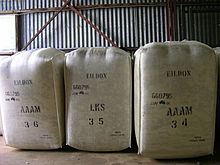
More than 60 guests were at the Parkes Services Club last Thursday to toast the success of Quality Wool’s recent charity wool auction for Ronald McDonald House Westmead. The auction raised $77,000 to assist seriously ill children and their families.

Quality’s New South Wales Operations Manager Chris Scott said the company was thrilled with the result and thanked all grow- ers who donated wool for the auction from the Riverina to the Central and Western re- gions.

“Our wool drive for Ronald McDonald House Westmead was again well supported and with the delayed auction timing this year, it was great to see a number of new growers donating wool,’’ Chris said.

“We had donations from our stores in Parkes, Orange, Wagga Wagga and Con- dobolin, as well as from near Oberon, Dubbo, Gilgandra and Coonamble, and down to Grenfell and Young.’’

Buoyed by a flourishing wool market and a delay in the sale fixture this year that helped increase growers’ wool donations for the auction to some 14,000 kilograms (93 bales), this year’s total of $77,000 easily eclipsed last year’s figure of just over $55,000.

Quality Wool visited farms to pick up donated wool and clean out sheds for growers, and it pressed and auctioned the wool free of charge. The Australian Wool Testing Authority also tested the wool for free, ensuring all proceeds would go to Ronald McDonald House Westmead.

In its fifth year, the charity wool auctions have raised over $225,000 for the home away from home that supports families with seriously ill children attending The Children’s Hospital Westmead.

Chemicals That Cure Malaria Can Kill Weeds Too

April 6, 2017 By Maggi Barnard


Plant biologists at the University of Western Australia (UWA) have revealed the relationship between plants and the parasite that causes malaria is close enough to mean many antimalarial drugs are effective her- bicides.

The work offers a new take on an evolutionary connection made in the 1990s when herbicides were shown to interfere with processes in the malarial parasite.

The research, published in Scientific Reports, shows that the extensive knowledge of antimalarial drugs could be applied to creating much-needed new herbicides.

This line of thinking began in 2008 when Dr Joshua Mylne, a plant geneticist, enlisted in the Army Reserve and was assigned to the Australian Army Malaria Institute in Brisbane.

Dr Mylne said almost 20 years ago, researchers used herbicides to prove that the malarial parasite Plasmodium contained an organelle that was essential and did many of the same things plant chloroplasts did.

“Subsequently, herbicides were used as starting points to develop new antimalarial drugs, but thinking seems not to have extended in the opposite direction,” Dr Mylne said.

“There is an urgent need for new herbicides and in particular ones that work differently or have different targets; a feature called the mode of action.”

Dr Mylne, now a principal investigator with UWA’s School of Molecular Sciences, affiliated with the national ARC Centre of Excellence in Plant Energy Biology, said herbicides were integral for modern day agriculture, but the success of glyphosate and spiralling costs to develop new herbicides had stymied progress.

“In the past 30 years no new herbicide mode of action has been brought to market during a time that over 500 new cases of herbicide resistance have appeared,” he said.

Co-author and organic chemist associate professor Keith Stubbs said antimalarial drugs were ideal as starting points because they were non-toxic to humans and often had the right chemical properties to also af- fect plants.

Lead author and PhD student Maxime Corral said the finding would enable researchers to use knowledge about antimalarial drugs and even the drugs themselves to develop new herbicides against weeds.

“Making this connection doesn’t just mean working with antimalarials such as herbicides, it also means you can think about what antimalarial modes of action are not being exploited by herbicides and whether they could be.”

“Despite decades of use, the way some antimalarial drugs work remains unknown,” Dr Mylne said.

“Plants are easy to work with so we might be able to use plant genetics to reveal how antimalarial drugs work”.

Cattle Drinking Monitoring System Saves Time

March 30, 2017 By Maggi Barnard

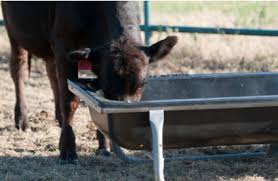
A cattle drinking monitoring system invented by Four Winds Farm staff has been used for more than one year with great success. This device consists of a monitoring host and several water level sensors. The monitoring host includes a global system for mobile communication (GSM) to transmit information on water shortage or water availability to the farmer’s mobile phone via SMS.

The water level sensor is installed with a water level testing switch and an ultradistant radio transmitter. The water level testing switch is placed into the water tank or the water tower, and the water level sensor is waterproof and installed in the water tank or beside the water tower. In case of a fault in the water supply system or water shortage in the tank, the water level switch transmits the signal to the water level sensor, which transmits the signal to the monitoring host via radio. The water level sensor is powered by one 3.6V battery with a service life of three to five years.

One monitoring host monitors 99 water level sensors. The monitoring host transmits information via radio. The effective communication distance between them is approximately 10km. If the monitoring host is installed in the farmer’s workshop, the water level sensors are installed in a circular radius of 10 km.

The device reduces time spent to observe water levels. The farmer can still get watershortage information with no one on the farm. Four Winds Farm is open to anyone wanting to see it in practise. For more information email aa0449615225@163.com.

New Tractor Released In Red Centre

March 2, 2017 By Maggi Barnard


CaseIH and the Australian dealer network gathered in the Australian Red Centre for the release of the New CaseIH OPTUM CVT last month.

The Optum CVT series is the newest trac- tor family to CaseIH and Sincock LVM, en- gineered on the success of the Puma. Available in two models the Optum 270 and the 300 engine horse power with both models utilising the continuously variable transmis- sion (CVT). The Optum suits many applica- tions from tillage, spraying to the hay mar- ket.

Key features in the machine are the 6.7L engine designed as a joint venture between Cummins, CNH and Iveco. The engine has been widely used in the production of the Maxxum, Puma, Magnum, Patriot Sprayers and the Axial Flow Combines over the past years. The cab is all about operator com- fort. It is spacious with 5.9m2 of glass for the best vision so the operator has a bird’s eye view of all implements.

For more information, call in today and speak with the friendly team at Sincock LVM in Parkes and Condobolin.

Ostini Wool Market Update

February 2, 2017 By Maggi Barnard

Due to Thursday’s Australia Day Holiday, the week’s sales were held on Tuesday and Wednesday. The market opened on Tuesday with a negative tone, leaving the NRI 20 cents cheaper. However, Wednesday’s market had a different feel with prices opening at the previous day’s levels and in many cases lots started showing improvement.

Style and spec again played a large role in market movement (the better the type the lesser the falls). The skirting
market closely mirrored the fleece market, although, some low spec / high vm lots struggled to find support and were
tending cheaper. The crossbred market continued to struggle with further losses of around 20 cents with the exception of 28 micron which only lost 5 cents for the week. The oddment sector also suffered losses but not to the same degree, and Sydney and Fremantle gained ground on day two, setting a positive tone for next week’s sale.

Sales continue next week with currently 42,584 bales rostered for sale in Sydney, Melbourne and Fremantle.

  • « Previous Page
  • 1
  • …
  • 17
  • 18
  • 19
  • 20
  • 21
  • …
  • 24
  • Next Page »

Click here to download the recent issue (185) of The Forbes & Parkes Phoenix (2.2MB PDF) – 17th April 2026

SEARCH THE PHOENIX

STAY CONNECTED

The Parkes Phoenix would like to thank you, our Facebook friends, for your continued support and readership!

Phoenix Office
7/113-127 Rankin Street, Forbes NSW 2871

Editor
0432 337 278
editor@parkesphoenix.com.au

Sales
0432 337 278
sales@parkesphoenix.com.au

View our Privacy Policy.
View our Conflict Resolution Process.
View our Ethics and Complaints Policy.
Want to advertise with us?
Information on our Community Promotions.

We are always looking for new articles of interest to the local community.

Please feel free to submit an article for possible inclusion in a future issue.

To submit an article, click here to use our online article submission form.

Subscribe

* indicates required

Copyright © 2026 · Magazine Pro Theme On Genesis Framework · WordPress · Log in