• Home
  • Articles
    • Front Page
    • General Interest
    • Special Interests
    • Snippets
    • Mayoral Notes
    • Letters to the Editor
  • Our Community
    • Our People
    • Question of the Week
    • Jobs in the Central West
    • Be Seen
    • What’s On
  • Special Interests
    • Women In Business
    • Rural Round Up
    • My Place
    • Health & Wellbeing
    • Loving Local Living
    • Just a Short Drive
    • Real Estate
  • Sports
    • Bowls
    • Cricket
    • Equestrian
    • Footy Tips
    • Golf
    • Netball
    • Rugby League
    • Rugby Union
    • Soccer
    • Touch Football
  • Classifieds
  • Competitions
  • Contact Us
    • Contact Page
    • Advertise with us
    • Testimonials
    • Submit an Article
    • Subscribe to the Parkes Phoenix

Parkes Phoenix

Ostini Wool Weekly Market Update

December 6, 2019 By Maggi Barnard

This week saw the market continue to retreat. By the end of the first selling day, the individual Micron Price Guides (MPGs) had lost up to 24 cents. The only MPG to not lose ground was 21 microns, which recorded no change. On the back of these losses the NRI fell by 18 cents for the day.

Further losses of 10-20 cents were wiped off the MPGs on day two, pushing the NRI down another 12 cents. By weeks end, the NRI had lost 30 cents to close at 1,561.

However, it is worth noting that AWEX do not quote below 16.5 microns, where best style fine wools of 16 mi- cron and finer were firm and well supported throughout the week.

It is also interesting to note that this year’s lower prices combined with the lower volumes has resulted in the Y.T.D turnover being down by half a billion dollars, a reduction of 36%.

41,274 bales are currently rostered for sale next week.

Source: AWEX
Ostini Wool Weekly Market Update

November 1, 2019 By Maggi Barnard

This week’s market opened on a positive note and continually strengthening all the way to the final hammer. Day one saw the individual Micron Price Guides (MPGs) rise by 10-31 cents in the East and by 35-49 cents in the West. Sydney did not sell on day two, however the market continued to rise in Melbourne (albeit modestly when compared to the solid gains achieved on the first day).

The Melbourne MPGs rose by 10-34 cents, on day two, while Fremantle continued to strengthen with their MPGs adding another 26-36 cents. In a rare turn of events the Fremantle MPGs for 19.5 through to 21.0 micron are sitting above those of the Eastern Centres. Day two also saw the crossbred mar- ket perform better than in recent weeks, with 10-32 cents added on day two in Melbourne.

28,152 bales were put before the trade this week, next week’s offering is forecast at 39,446 bales.

Source: AWEX

Climate Guides Help Farmers

November 1, 2019 By Maggi Barnard

Farmers will be given the best possible cli- mate information so they can make sound business decisions. The Bureau of Meteorology’s first 20 Regional Weather and Climate Guides have been released.

The $2.7 million project was part of the Government’s Drought Assistance Pack- age. Minister for Drought David Littleproud said the guides would give farmers a clearer picture of what to expect in upcoming seasons. “This will give farmers the best possible guidance,” the Minister said. “This includes rainfall and temperature trends, frost risk, when to expect the wet season, and the nature of local droughts, floods and heatwaves.”

“It will help with decisions such as when to plant crops, put fodder aside, lease land, build water storages or take out loans. We’ve worked with local farming groups so the data meets the needs of each region.”

The guides have been produced by the Bureau of Meteorology, FarmLink and CSIRO in consultation with rural businesses, communities and farmer groups.

All guides will be released by the end of the year and made available through the National Farmer’s Federation FarmHub tool and the Climate Kelpie website.

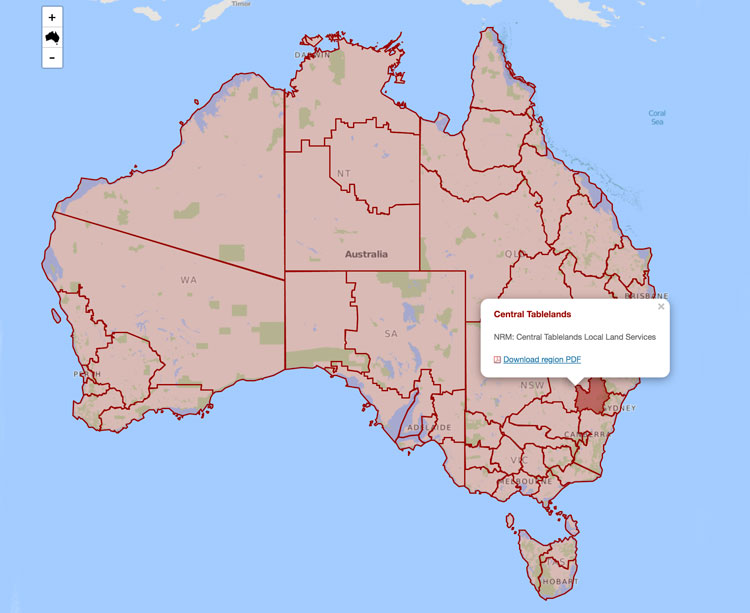
Guides are available for National Resource Management regions including the Central West, Riverina, Murray, Central Tablelands, North West, Hunter, North Coast, South East, Northern Tablelands and Greater Sydney in NSW. Guides can be found at: www.bom.gov.au/climate/climate-guides/

Ostini Wool Weekly Market Update

October 4, 2019 By Maggi Barnard


This week’s market recorded increases for the third consecutive series, with main buyer interest in the 18.5 micron and coarser range. The first day of trade saw the NRI gain 60 cents, while the second day was more subdued, with only mar-ginal increases recorded. By the close of the week, the NRI had regained 65 cents, to close at 1635.

In the last three weeks, the NRI has bounced back 257 cents (69% of what it had lost since the mid-year recess). Sell-ers were keen to accept the increased prices, resulting in a national passed in rate of only 7.6%. However, it is worth noting that the fleece market softened to-ward the end of the series, with the West-ern region recording falls of 30-70 cents on the final day.

Skirtings followed a similar path to the fleece, with strong competition helping to push prices up by 40-70 cents.

Next week’s national offering has in-creased considerably as a result of the price rises, currently there are 40,999 bales rostered nationally.

Source: AWEX

On-Farm Issues Direct From Growers

October 4, 2019 By Maggi Barnard

Grower John Pattison, Takada Farming, Marrar with GRDC Northern Panel member Bruce Watson from Parkes.


The Grains Research and Development Corporation (GRDC) recently conducted a four-day tour through the Central West and southern NSW to gain ‘on the ground’ insight into the current challenges and opportunities facing grain growers.

GRDC Northern Panel Chair John Minogue said the tour had an important advisory and strategic role in helping to guide ongoing and future research investment.

“While many growers and advisers are battling drought conditions most are positive about the long-term future of the grains industry and value the role research plays in ensuring profitability.”

Issues raised by growers, advisers and end-users included: an increased interest in trials with livestock components; why a successful pulse crop is critical for NSW; the impact of increasing biologicals on soil health; future research capacity; heat and drought tolerant crops, particularly triticale and oats; improving the skills of graduate level agronomists; the carbon economy and what it will mean for grain growers; long season canola options; and what’s next in the barley breeding program.

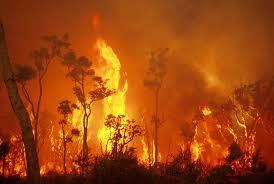
Prepare For Bushfire Season

September 5, 2019 By Maggi Barnard

Australians are urged to work with their community, neighbours and friends to prepare for another tough bushfire season.

Minister for Natural Disaster and Emergency Management David Littleproud said all parts of Australia were vulnerable because of dry conditions and people shouldn’t be complacent.

NSW authorities have brought forward the Bushfire Danger Period in 12 Local Government Areas two months early because of drought and above average winter temperatures. “Last August we saw homes destroyed in NSW; and again in North Queensland in November when the fire danger rating reached Catastrophic for the first time. Bushfires can strike at any time and we’ve got to be prepared,” the Minister said.

“The Coalition Government has committed more than $6.2 million on the next generation Australian Fire Danger Rating System so we have more accurate and local fire risk messaging.”

“All Australians, especially those in highrisk areas, should have fire plans in place well ahead of time to make sure they and their families are safe. Also when people know their neighbours it saves lives and helps during the recovery.”

“People wanting more information, including on how to plan and prepare, should contact their local fire service.”

Red Cross has tools and resources to help people prepare for disasters, available at www.redcross.org.au

Ostini Wool Weekly Market Update

September 5, 2019 By Maggi Barnard

This week’s market continued to decline; however, the losses were not as extreme. By the close of trade the NRI had lost 17 cents to finish at 1521.

Buyers continued to seek out the better style lots, resulting in minimal change for those types. Non-mulesed wool continued to attract strong competition, maintaining a healthy premium over similarly specified wools (as much as 200 cents clean for selected lots). However lesser style wools and those with poor additional measurements, lacked the same demand resulting in general losses of 50- 80 cents.

Oddments also suffered losses this week, with all types and descriptions generally falling by 80-120 cents. Crossbreds were the only sector to record increases, with 26 to 28 micron generally gaining 25-40 cents (it was these gains that prevented the NRI from recording a larger fall).

Despite the general reductions, more sellers were willing to accept the current level, as the national passed in rate reduced to 16.1% (compared to 35.3% the previous week).

Source: AWEX

Ostini Wool Weekly Market Update

July 4, 2019 By Maggi Barnard

Just over 29,000 bales were offered in the final sale of the season. End of year figures show an overall reduction of 225,182 bales offered, compared to the 2017/18 season, a fall of 11.9%.

The market opened softer and then continued to drop as the week progressed.

Better style wools were generally 70-100 cents easier, while the lesser style wools were even harder hit, up to 150 cents cheaper. The NRI fell by 58 cents, finishing the season at 1,731 and has now suffered the second highest monthly fall since the end of the Reserve Price Scheme (losing 178 cents in June).

The skirtings also dropped sharply, generally losing 50-100 cents, with higher VM wools most affected. Crossbreds generally eased by 30-50 cents.

The first sale of the new season is traditionally a larger sale, as growers looking to sell in the new financial year take the first opportunity. This year however, the sale is smaller than normal with 34,504 bales currently rostered.

Source: AWEX

Local Bulls Head To Northern Territory

July 4, 2019 By Maggi Barnard

Moogenilla Angus bulls have been sold to a wide range of areas, including Far North Queensland, South West Queensland and the Northern Territory in 2017 and 2018. Among the local, Western NSW, Tablelands and Eastern Riverina beef breeders, Consolidated Pastoral Company (CPC) has been competing to take the Moogenilla Angus bulls north.

Troy Setter, from CPC said the Moogenilla bulls are balanced and well suited to the Northern Australian environment. Moogenilla bulls have also settled into the Mulga country in South West Queensland and the dry plains in Far West NSW, equally with the cold Tablelands and the local mixed farming areas.

‘A tough, adaptable bull with good temperament, growth and carcass is what we’re aiming to provide to the breeders on Friday 2nd August in Forbes’, said Sarah Wrigley, from Moogenilla Angus.

The New Definition Of A Lamb

July 4, 2019 By Maggi Barnard

Did you know the definition of a lamb is changing? From 1 July 2019 the new definition comes into place. If you’re unsure of what it means here are some facts from Sheep Producers Australia.

The definition of a lamb is changing in Australia. The current definition of a lamb is ‘A female, castrate or entire male that has 0 permanent incisor teeth’. The new definition is ‘an ovine animal that: (a) is under 12 months of age; or (b) does not have any permanent incisor teeth in wear.’ This means a lamb is able to cut one or both of its permanent central incisor teeth, as long as they are not in wear.

Why is the change occurring? The current definition gives producers no warning light about when a lamb stops being
a lamb – the moment a permanent incisor erupts, the lamb is downgraded to hogget. The new definition gives producers greater certainty and a definitive signal to make moves to market their lambs. Producers will have generally less than a month from the time of eruption to when permanent incisors are in wear. The new definition is
also consistent with New Zealand’s definition – Australia’s biggest lamb competitor in export markets.

Research has shown that a lamb under the new definition was as acceptable to consumers as lamb under the current definition.

For more information head to www.sheepproducers.com.au.

  • « Previous Page
  • 1
  • …
  • 11
  • 12
  • 13
  • 14
  • 15
  • …
  • 24
  • Next Page »

Click here to download the recent issue (203) of The Forbes & Parkes Phoenix (2MB PDF) – 21st August 2026

SEARCH THE PHOENIX

STAY CONNECTED

The Parkes Phoenix would like to thank you, our Facebook friends, for your continued support and readership!

Phoenix Office
7/113-127 Rankin Street, Forbes NSW 2871

Editor
0432 337 278
editor@parkesphoenix.com.au

Sales
0432 337 278
sales@parkesphoenix.com.au

View our Privacy Policy.
View our Conflict Resolution Process.
View our Ethics and Complaints Policy.
Want to advertise with us?
Information on our Community Promotions.

We are always looking for new articles of interest to the local community.

Please feel free to submit an article for possible inclusion in a future issue.

To submit an article, click here to use our online article submission form.

Subscribe

* indicates required

Copyright © 2026 · Magazine Pro Theme On Genesis Framework · WordPress · Log in

nsw government logo

The Parkes Phoenix's Digital Diversification of Free Regional Media project is proudly funded by the NSW Government Regional Media Fund