• Home
  • Articles
    • Front Page
    • General Interest
    • Special Interests
    • Snippets
    • Mayoral Notes
    • Letters to the Editor
  • Our Community
    • Our People
    • Question of the Week
    • Jobs in the Central West
    • Be Seen
    • What’s On
  • Special Interests
    • Women In Business
    • Rural Round Up
    • My Place
    • Health & Wellbeing
    • Loving Local Living
    • Just a Short Drive
    • Real Estate
  • Sports
    • Bowls
    • Cricket
    • Equestrian
    • Footy Tips
    • Golf
    • Netball
    • Rugby League
    • Rugby Union
    • Soccer
    • Touch Football
  • Classifieds
  • Competitions
  • Contact Us
    • Contact Page
    • Advertise with us
    • Testimonials
    • Submit an Article
    • Subscribe to the Parkes Phoenix

Parkes Phoenix

Virtual Field Day On Harvest Safety

September 18, 2020 By Maggi Barnard

This year’s harvest is set to be a bumper one and farmers, contract harvesters, transport companies and agricultural machinery retailers are invited to attend the Be Road Ready For Harvest Virtual Field Day via Zoom on Thursday, 24th September from 8am.

Parkes, Forbes and Lachlan Shire Councils’ Road Safety and Injury Prevention Officer, Melanie Suitor, said that while the usual face to face field day at the Central West Livestock Exchange wasn’t possible due to the current COVID-19 restrictions, the online delivery would hopefully make it more easily accessible for participants to attend.

“For the first time in about three years it is looking like we are going to have a good harvest, and it is therefore important to refresh people’s knowledge about the new and current rules and regulations for legally and safely moving harvest equipment on the road.

Topics for the field day include how to apply for permits, the new National Agricultural Machinery Notice, load restraint, pilots, the Grain Harvest Management Scheme, COVID-19 Safety Plan for silos, border restrictions and much more.

“The first 20 people to register will receive a free cuppa! And by taking part in a short road safety quiz you could win one of three Engel car fridges valued at $190,” Melanie said.

Registration is free and can be completed via the Parkes, Forbes or Lachlan Shire Councils’ Facebook pages.

Attendees will all receive a Moving Harvest Machinery 2020 USB, which contains most of the relevant notices and information about moving agricultural machinery on the road.

Grassland Fires A Potential Risk

September 4, 2020 By Maggi Barnard

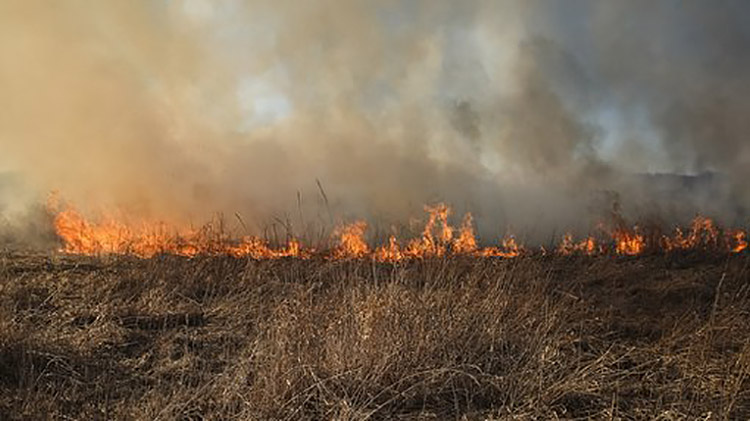
Australians should be prepared for more fire risks according to the Australian Seasonal Bushfire Outlook: September 2020, which covers all states and territories through to November.

The Bushfire and Natural Hazards Cooperative Research Centre published its seasonal bushfire outlook, which takes into account vegetation and fuel loads, as well the existing and forecast weather conditions.

Minister for Emergency Management David Littleproud said all Australians, especially in the high-risk areas outlined in the report, should now be preparing to protect their family and property against bushfires.

“While communities across Australia are continuing to recover and rebuild from the horrific 2019-20 bushfire season, the next challenge is to make sure we are all prepared for the risks facing us over the coming summer,” Minister Littleproud said.

“In the south-east of the country, experts are warning of potentially hazardous grassland fires due to above average levels of growth brought on by wetter than average conditions expected through spring.”

“While we can work with authorities to properly prepare, it’s also critical families, households and individuals do what they can to prepare themselves. Talk to your neighbours, ask them about their evacuation plan and let them know about your plan.”

Ridgehaven Ram Sale

August 21, 2020 By Maggi Barnard

The Ridgehaven ram sale is on 10th September.

Since 1965 the Ridgehaven Poll Dorset stud has been run with a focus on producing top quality, commercially focused animals.

Structural correctness, fertility, ease of lambing, growth rates, muscle and fat cover and wool type have been a basis for selection from the start. In the last four years, the stud has worked with meat processors and UNE to accurately identify genetic lines with superior lean meat yield, intramuscular fat (IMF) and eating quality.

Ridgehaven has seen the benefits of carcass measurement and how this can be used for genetic gain and it is now an important annual aspect of their breeding program.

The Ridgehaven ram sale will not only be held in person on property on Thursday, 10th September, but will also be interfaced on AuctionsPlus.

Next Thursday, 27th August, will be an open day where the rams and ewes can be viewed.

For the safety of all attending, on the open day and on sale day, COVID-safe measures will be in place.

For more information contact Ruth Klingner on 0438 642 113, Isabele Roberts on 0405 098 335 or Floyd Legge on 0402 185 727.

Rural Aid Delivers Millions In Assistance To Farmers

August 7, 2020 By Maggi Barnard

In the past 12 months, Rural Aid has distributed over $31 million in assistance to farmers and their communities, according to its annual and latest quarterly figures.

Rural Aid CEO, John Warlters said delivering, on the ground, for farmers and rural communities was more important than ever right now. “We could not support our farmers and rural communities without the generosity of everyday Aussies and our corporate sponsors,” John said.

“Covid-19 has certainly presented some challenges and our staff are as tenacious as the farmers we support. I’m remarkably proud that we’ve continued to support those in need without skipping a beat over the past year and, in particular the past three months.”

From April to June this year, Rural Aid delivered 17,041 large bales of hay worth over $4.7 million into 286 locations to 1,110 drought and fire affected farmers on the back of 274 trucks. That equates to over 85 farmers per week receiving 1,310 large bales of hay.

“We also delivered close to $62,000 worth of domestic drinking water to 140 farmers,” said John. Each water truck delivered on average 19,000 litres, and that equates to around 2.66 million litres or just over one Olympic size swimming pool of domestic drinking water.

Over the same period, over $2.2 million in financial and pre-paid Visa card assistance was distributed to 2,378 farmers, with many spending in their communities, supporting local economies.

These are just two examples of what Rural Aid has delivered. If you are a primary producer or farmer and require assistance, register at www.ruralaid.org.au. The public is called on to continue to support Rural Aid by donating at: www.ruralaid.org.au/donate/

‘Solar’ Sheep In Magnificent Condition

August 7, 2020 By Maggi Barnard

The team of volunteers who helped to shear 125 trial wethers last week that will help boost the Parkes P.A. & H. Association’s funds.

Sheep on a solar farm might be the way forward following a very successful first year of a wether trial run by the Parkes P.A. & H. Association.

Not only will the trial pave the way forward for the continued use of agricultural land combined with solar farms, but will earn the show society some much-needed funds following the cancellation of the show this year because of COVID-19.

The Show Society negotiated a deal with the owners of the Parkes Solar Farm to let sheep graze the weeds growing under the panels. This is a win-win situation for both parties as the sheep keep the weeds under control.

The four-year trial involves ten farmers who all contributed wethers of mixed blood- lines. The Department of Primary Industry (DPI) in Orange, under the leadership of Dr Kathryn Egerton-Warburton, is keeping track of the statistics to make comparisons with other trials.

Last week a team of volunteers came together to shear the sheep after the first full season with a total of 125 wethers getting the clip.

“The quality of wool is just phenomenal,” said Graeme Ostini from Ostini Wool. “The wethers are only two years old, and their fleece weigh in between 6 to 7kg and measures over 100mm. It is just magnificent, considering half of the first season was still in the drought.”

With the wool market in Sydney opening this week, Graeme predicted the wool from the trial could earn the show society around $6,000.

One of the participating farmers Ken Keith was just as impressed with the first year.

One of the three volunteer shearers who helped out with the wether trial.

“The sheep did exceptionally well on the solar farm.” Ken initiated the trial after he heard from the owners of the solar farm that in France sheep were used to control the weeds under solar panels.

Ken said not only did the sheep use the panels’ shade, but the run off from the pan- els, even with very little rain, produced great feed for the sheep.

Ken said with the approval of a third solar farm north of the Condobolin Road, it was very important not to sterilise agricultural land but to ensure its multi-purpose use.

He said more teams would have participated in the trial had it not been for the drought. The other participants are Gavin Tom, Daniel Westcott, Robert Watt, Dave Johnson, Stafford Orange, Edwin Nash, Richard Green, Geoff Witherow, Ian Westcott and Paul Carty.

For Liz Brown, secretary of the Parkes P.A. & H. Association, the sale of the wool would mean a great financial boost to the society. “Even if it just means keeping the office running.”

By Maggi Barnard

It’s A Marshmallow Jungle

July 31, 2020 By Maggi Barnard

Sharon Woods took this photo on their property west of Parkes where the marshmallow weed is growing at a phenomenal rate.

The warmer winter weather and good rains have resulted in weeds growing at a phenomenal rate, especially marshmallow weed. There has been reports of the mallow weed growing up to 2.4m high on some properties in the region.

According to Parkes Shire Council’s Environmental & Sustainability Coordinator Michael Chambers the mallow plant is fairly common and widespread, and “does come up every year when conditions are favourable”.

While some people feel it has become a real pest, Michael said it was only regarded as a nuisance weed, and not a state or regionally significant weed that needs to be controlled under the Biosecurity Act.

“Controlling this plant is not always easy,” said Michael. “For the home gardener, one of the best ways to control it in lawns is to make sure turf is thick and healthy as it will choke out the weed and not allow the seeds to spread.

“If you choose to use a herbicide, be sure to read the directions thoroughly, and use it when the plants are young and in their non-flowering/seeding state. Never eat a mallow plant that has been sprayed with a herbicide.”

Apparently, alpacas love to eat the mallow weed. The young leaves are edible for humans too and tastes lovely in salads or as cooked greens. If you feel adventurous, make sure to only forage for leaves in your own yard.

Grains Industry Critical For Regional Jobs

July 3, 2020 By Maggi Barnard

A new report has revealed a strong correlation between Australian grains production and jobs in regional areas – about one job for every 1,000 tonnes of grain produced.

The Grains Research and Development Corporation (GRDC) report outlines research conducted by the Regional Australia Institute. GRDC head of industry and government relations, Justin Crosby, says grains comprise about a quarter of the value of Australia’s agricultural industry.

“This report clearly shows that grain growers are the backbone of many of Australia’s regional economies and demonstrates the critical importance of ensuring that they continue to be profitable.”

“The number of grain production jobs – people involved in the growing of grain, which may be in combination with the production of other crops and livestock – increases with raw grain tonnage and gross value,” he said.

“For every 100,000 tonnes of grain produced there are, on average, 87 grain production jobs in Queensland and NSW; 121 in Victoria, South Australia and Tasmania; and 54 in Western Australia.

There were 34,745 direct grain production jobs at the time of the last census, with the bulk in NSW (29%).

While the grains industry continued to be a significant source of Australian employment, the number of grain production jobs fell from 50,707 jobs in the 2006 census to 34,745 grain production jobs in 2016.

“In the face of tight labour markets in regional Australia, grain growers have been able to adapt through adopting improved technologies and achieving increased efficiencies,” Justin said.

“Regions with a high proportion of grain production jobs, compared with the national average, have a specialisation in grain production and are more dependent on the success of the grains industry for economic outcomes,” he said.

“These ‘specialised regions’ are strongly concentrated in the WA wheatbelt, the Yorke and Eyre peninsulas in SA, the Grampians region in Victoria, central NSW and inland southwest Queensland.”

More Support For Farmers

June 19, 2020 By Maggi Barnard

New measures to improve the Farm Household Allowance (FHA) program will make it easier to access. “We know the drought is continuing to bite despite welcome recent rainfalls in some parts of the Riverina and Central West,” said Riverina MP and Deputy Prime Minister Michael McCormack.

Changes to the FHA over the past year include simplifying the assets test to a single threshold of $5.5 million, no differentiation between farm and non-farm assets, and anyone under the limit will be paid the full rate automatically.

Rural financial counsellors and farm consultants have also now been added to the list of professionals able to complete Farm Financial Assessments.

The amount of funding through the Activity Supplement has been doubled to $10,000 for farmers and their partners to seek independent expert advice or gain new qualifications or skills. “The financial strain from this drought for farmers and indeed regional communities as a whole will continue well after this drought breaks,” Michael said.

“Our farmers produce the very best food and fibre in the world and the Federal Government is standing with them to ensure they come out the other side of this drought as best as they possibly can.”

Farmers Don’t Rely On Subsidies

June 5, 2020 By Maggi Barnard

A research report released by Australian Bureau of Agricultural and Resource Economics (ABARES) confirmed Australia’s farmers were among the least subsidised in the world. Australia has one of the lowest levels of agricultural support across the 37 Organisation for Economic Co-operation and Development member countries.

“This work by our nation’s most respected agricultural research body clearly sets out that our farmers don’t need to rely on handouts to thrive,” said Minister of Agriculture, David Littleproud. “They work mighty hard off their own bat to produce the safe and fresh food trusted by all Australians and sought after by the world.

Our Bees Mean The World To Us

June 5, 2020 By Maggi Barnard

World Bee Day celebrated on 20th May raised awareness about the essential role these hardworking insects play as pollinators.

Australia is home to over 1,500 species of native bees, and alongside European honey bees, they play an important role in pollinating commercial crops such as mango, blueberry, eggplant, tomato, almonds and macadamia, as well as native plants.

Currently a number of bee pests and diseases are a potential risk to the honey bee industry, environment and to Australia’s native bee populations. In recognition of the crucial role that bees play in supporting food production, the government granted $1.5 million to AgriFutures last year for research to ensure bee health and promote the crucial role bees play in supporting food production.

The Australian Chief Environmental Biosecurity Officer is working with Plant Health Australia to investigate the biosecurity risks to native bees and to improve responsiveness to these risks.

The recent summer of bushfires and drought have had a significant impact on floral reserves and on pollinators. As part of the recovery, beekeepers are currently eligible for grants of up to $75,000 to pay for clean-up and business reinstatement activities.

  • « Previous Page
  • 1
  • …
  • 9
  • 10
  • 11
  • 12
  • 13
  • …
  • 24
  • Next Page »

Click here to download the recent issue (187) of The Forbes & Parkes Phoenix (1.7MB PDF) – 1st May 2026

SEARCH THE PHOENIX

STAY CONNECTED

The Parkes Phoenix would like to thank you, our Facebook friends, for your continued support and readership!

Phoenix Office
7/113-127 Rankin Street, Forbes NSW 2871

Editor
0432 337 278
editor@parkesphoenix.com.au

Sales
0432 337 278
sales@parkesphoenix.com.au

View our Privacy Policy.
View our Conflict Resolution Process.
View our Ethics and Complaints Policy.
Want to advertise with us?
Information on our Community Promotions.

We are always looking for new articles of interest to the local community.

Please feel free to submit an article for possible inclusion in a future issue.

To submit an article, click here to use our online article submission form.

Subscribe

* indicates required

Copyright © 2026 · Magazine Pro Theme On Genesis Framework · WordPress · Log in